


At CENTEL, we recognize the importance of protecting the environment and are committed to operating our business in an environmentally responsible manner. We consider both the direct and indirect environmental impacts of our operations and integrate them into our decision-making processes. To uphold this commitment, CENTEL has established an Environmental and Social Sustainability Policy grounded in the following key principles:

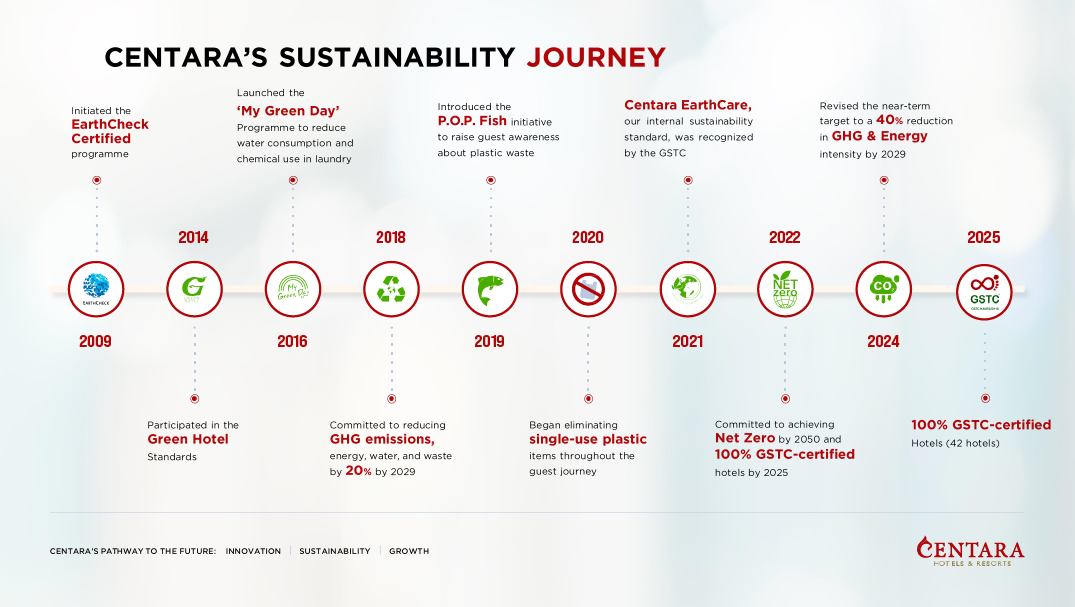
CENTEL recognizes that the primary driver of climate change is human activity. Therefore, we are committed to addressing this issue by analyzing and assessing the impacts across all aspects of our operations. Together with corrective action plans, we prioritize proactive adaptation and responses to climate change in order to mitigate its impacts and minimize actual and potential disruptions to our business operations. Our goal is to collectively reduce greenhouse gas emissions and transition to greener business practices, ensuring long-term business growth and resilience.
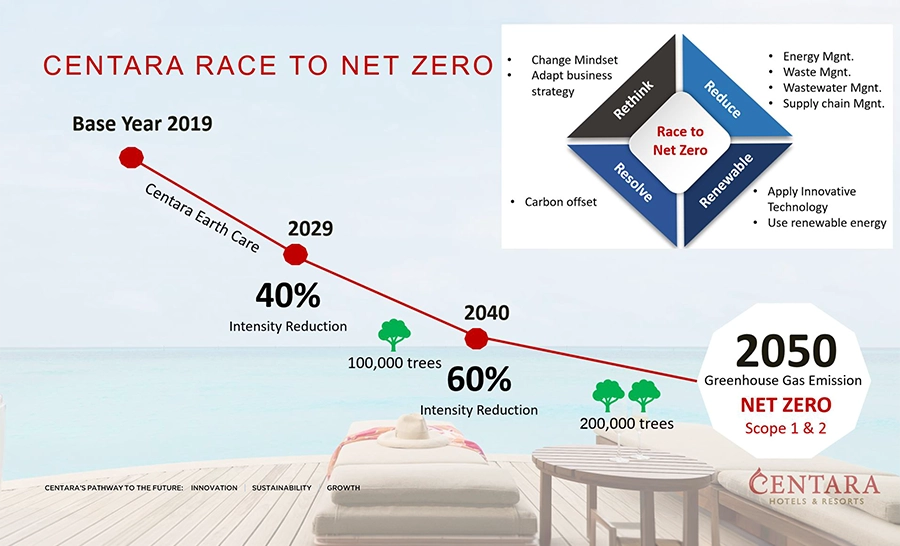
Our short-term targets: 2029 (Note: Compared to 2019 base year)
CENTEL has set 10-year environmental performance roadmap (2020–2029), reflecting its ambitious commitment to sustainability and responsible growth.
Our long-term targets: 2050 (Note: Compared to 2019 base year)
We have launched CENTARA Race to Net Zero as a strategic initiative to guide our operations toward achieving Net Zero emissions by 2050. To ensure continuous improvement and establish a more realistic and science-driven pathway, CENTEL is developing a Climate Strategy in 2025, aligned with the Science Based Targets initiative (SBTi). This strategy aims to decarbonize our operations and accelerate meaningful progress toward our Net Zero 2050 goal.
Total Greenhouse Gas Emissions (Scope 1,2,3)
Total Energy Consumption
Total Renewable Energy Consumption
Total Water Consumption
Total Recycled Water
Total Waste Disposed
Waste Recycling Rate
At CENTEL, we are committed to integrating technology and upgrading operating equipment to optimize energy efficiency and reduce the negative impacts of traditional energy consumption. We regularly conduct energy audits and assessments to support continuous performance improvement. At the same time, we are increasing the proportion of renewable energy within our operations through initiatives such as solar panels and waste-to-energy projects.
CENTEL recognizes the critical importance of the responsible use of common goods, including water, especially given the water-intensive nature of our operations. We actively collect data and monitor our business activities to ensure full compliance with local laws and regulations, ensuring that wastewater is treated in accordance with water quality standards. We also promote the reuse of treated wastewater to optimize water efficiency, while helping to prevent and mitigate risks to the environment and surrounding communities.
Effective water management is a key priority for us. This includes managing water consumption, treating and reusing grey water according to established standards. We also promote water conservation by implementing water-saving technologies and efficient equipment, and environmentally friendly cleaning products. Equally important is fostering awareness among our stakeholders to encourage collective action in preserving water. Through our “My Green Day” Program, guests staying more than one night are invited to support sustainable practices by reusing bed linens and towels or opting out of daily room cleaning services. These efforts not only contribute to reducing operational costs but also strengthen our resilience against the challenges of water stress and climate change.
CENTEL conducted a Water Stress Assessment using the WRI’s AQUEDUCT Water Risk Atlas, addressing concerns related to both water quantity and quality. This assessment supports our ongoing efforts to mitigate water-related risks and promote sustainable water use across our operations.
CENTEL is committed to responsible wastewater management to safeguard the environment and surrounding communities. In our Hotel Business, we conduct monthly wastewater quality testing and an annual inspection by certified external auditors to ensure full compliance with environmental regulations. In our Food Business, where operations are located in rented properties, we strictly follow the landlord’s wastewater treatment protocols to maintain environmental standards.
To enhance water efficiency, CENTEL has implemented Water Recycling & Reuse Projects, focusing on the reuse of treated greywater. A company-wide guideline supports hotels with on-site treatment systems in repurposing greywater for irrigation, green area maintenance, and cleaning of common areas—promoting efficient and sustainable water use across our operations.
CENTEL recognizes the environmental and community impacts of waste generated from our operations. To address this, we integrate circular economy principles into our business practices, with reuse, recycling as a key component. The CENTEL Waste Management System offers company-wide guidance on responsible waste handling aligned with the waste management hierarchy and food recovery hierarchy. Waste is categorized into four types. Each category follows proper disposal methods, with waste recovered, redirected back into the circular loop where possible. It promotes various waste diversion programs such as composting, fertilizer production, food donation, and repurposing food waste for animal feed.
Waste management for chemical cleaning containers is conducted through collaboration with partners to return empty packaging for proper management and recycling. The recycled materials are then repurposed into corner protectors for Intermediate Bulk Containers (IBC).
We also promote supplier collaboration to reduce single-use packaging by encouraging the use of reusable containers or returnable packaging for raw materials such as fruits, vegetables, and bread. In parallel, we advocate for sustainable packaging to support circular economy principles, minimize pollution, and promote environmentally friendly end-of-life disposal management.
Biodiversity is a vital pillar of CENTEL’s responsible business practices. We are committed to preserving natural ecosystems, restoring them where possible, and working toward achieving and maintaining No Net Loss. CENTEL has implemented policies and initiatives to promote biodiversity conservation across all operations and actively communicates these efforts to stakeholders. To further support this commitment, we provide staff training and guest education aimed at raising awareness and minimizing potential harm to biodiversity. Our approach ensures that every interaction with nature is grounded in respect, legal compliance, and environmental care.
In 2025, we conducted a Biodiversity Risk Assessment to further understand biodiversity-related impacts and dependencies. Based on the assessment results, we established a responsive mitigation hierarchy to address biodiversity impacts and continued our conservation and restoration initiatives both on land and underwater.